
en
BLOG & ACTUALITÉS

EOS_BRI

High-performance EOS-BRI 7-inch thermal imaging camera system for cars, lorries and agricultural vehicles.

In recent years, with the rapid development of artificial intelligence (AI) and autonomous driving technologies, numerous driver assistance systems have emerged in the market. These innovative technologies enhance driving comfort and safety without interfering with the driver’s operation.

A core function of most driver assistance systems is to alert drivers to potential hazards in advance, thereby helping avoid traffic accidents.

Without this Car Camera System, drivers often struggle to clearly see distant pedestrians at night, especially on poorly lit roads, when facing oncoming high beams, or in rainy, foggy, and hazy conditions. This significantly increases the risk of collisions with vulnerable road users (pedestrians, cyclists, motorcyclists, electric vehicle riders, tricyclists, animals, etc.), potentially leading to irreversible losses.

Equipped with our Car Camera System, the vehicle can capture far-infrared thermal radiation emitted by pedestrians, vehicles, and animals via a thermal imaging camera. The system generates video images based on thermal radiation intensity, greatly expanding the driver’s field of view. Integrated with advanced AI recognition for pedestrians, vehicles, and animals, the system provides early warnings, enabling drivers to navigate complex nighttime road conditions safely and avoid potential dangers.
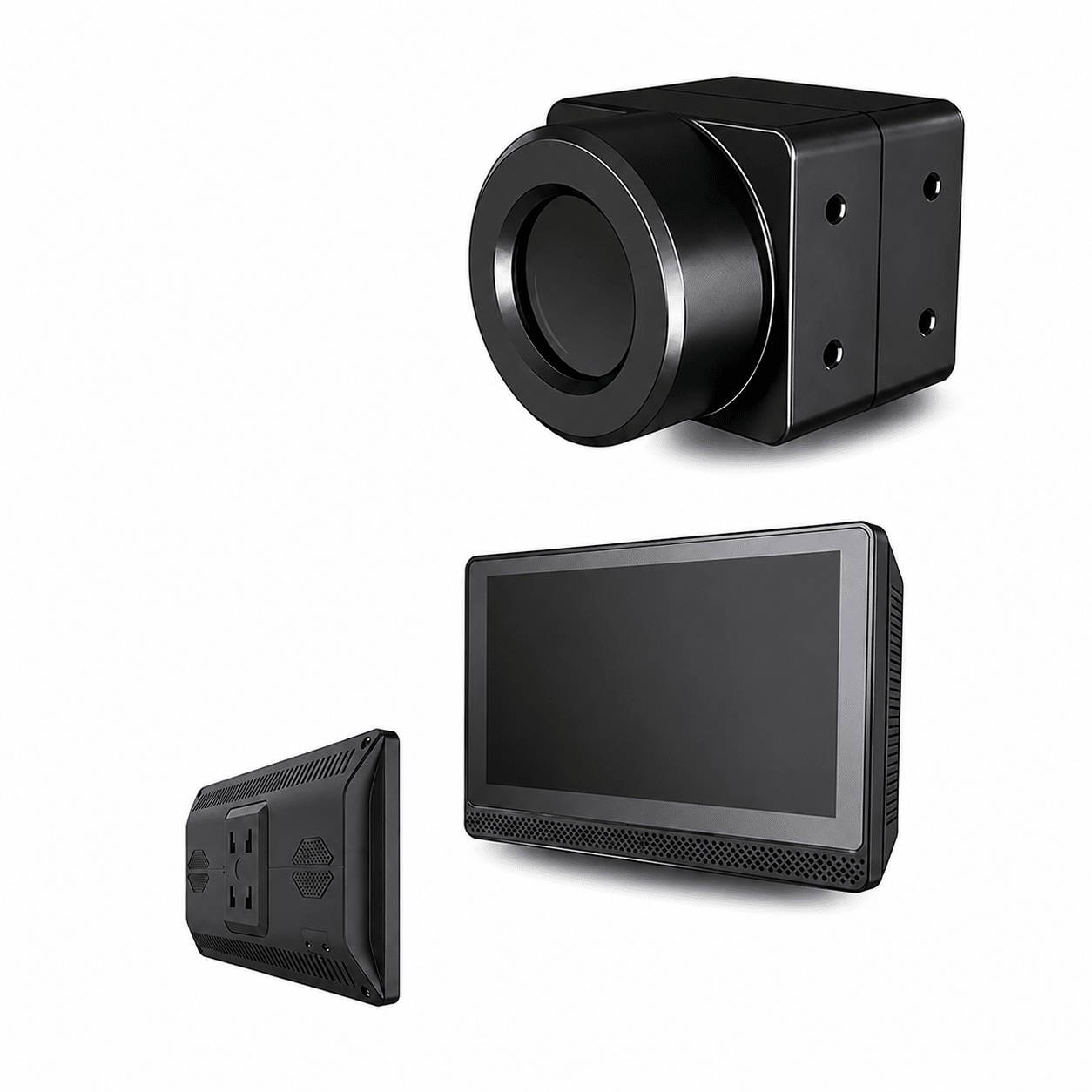
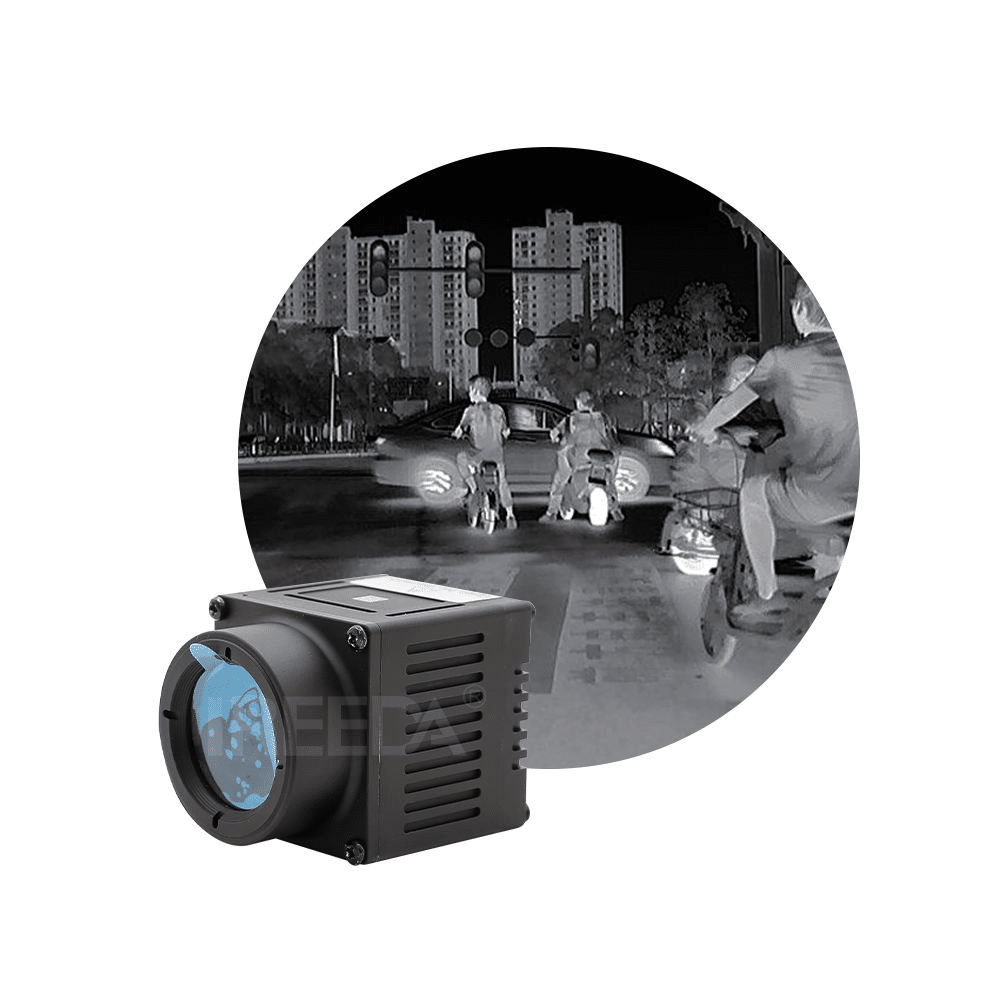
Datasheet
Installation manual

EOS_BRI

Technical details

Detection

days and nights

Vehicles : 1 263m
Humans : 859m

Recognition

specific

Vehicles : 316m
Humans: 214m

Resolution

bolometer (thermal camera)

Pixel:256×192 / 384×288 / 640×512
FOV : 18°×13° / 29°×22° / 48°×39°

How does thermal imaging improve
night-time driving?

70 per cent of serious road accidents occur at night due to poor visibility, glare from bright lights, mist and thick fog.

Thermal imaging solves all these problems:

  • Seeing in the dark
  • Anti-glare
  • Seeing through fog and mist

Thermal imaging (far-infrared) generates images based on differences in the surface temperature of objects, regardless of light conditions. It offers unique advantages over visible-light cameras in automotive applications for detecting heat-emitting objects (humans, animals, vehicles) in total darkness, in bright light, and in dense mist and fog.

Paramètres de confidentialité
Nous utilisons des cookies pour améliorer votre expérience lors de l'utilisation de notre site web. Si vous utilisez nos services via un navigateur, vous pouvez restreindre, bloquer ou supprimer les cookies par le biais des paramètres de votre navigateur web. Nous utilisons également du contenu et des scripts de tiers qui peuvent utiliser des technologies de suivi. Vous pouvez donner votre consentement de manière sélective ci-dessous pour autoriser ces incorporations de tiers. Pour des informations complètes sur les cookies que nous utilisons, les données que nous collectons et la manière dont nous les traitons, veuillez consulter notre Politique de confidentialité.
Youtube
Consentement à l'affichage du contenu de - Youtube
Vimeo
Consentement à l'affichage du contenu de - Vimeo
Google Maps
Consentement à l'affichage du contenu de - Google
Spotify
Consentement à l'affichage du contenu de - Spotify
Sound Cloud
Consentement à l'affichage du contenu de - Sound
BLOG & ACTUALITÉS